

After Divorce: An Emotional Reset, Not a Race Forward
There is a version of this conversation that sounds polished, detached, and overly optimistic.
This is not that version.

I understand dating after divorce because I’ve lived it.
And what many people don’t fully appreciate is this: divorce doesn’t just end a relationship - it disrupts you.
Divorce Is Not Just Emotional Pain. It’s Identity Disruption.
Divorce destabilizes three core systems:
Your identity - Who am I outside this relationship?
Your decision-making - Can I trust my judgment again?
Your sense of safety - Is emotional investment still safe?
You don’t walk away untouched. Even when you know the relationship was not right, the aftermath lingers.
It shows up in the smallest ways.
I remember struggling to make simple decisions - something as basic as buying an item of clothing felt overwhelming. I needed validation for things I would once have decided effortlessly.
That’s what emotional disruption looks like. Quiet. Subtle. Disorienting.
The Minefields No One Warns You About
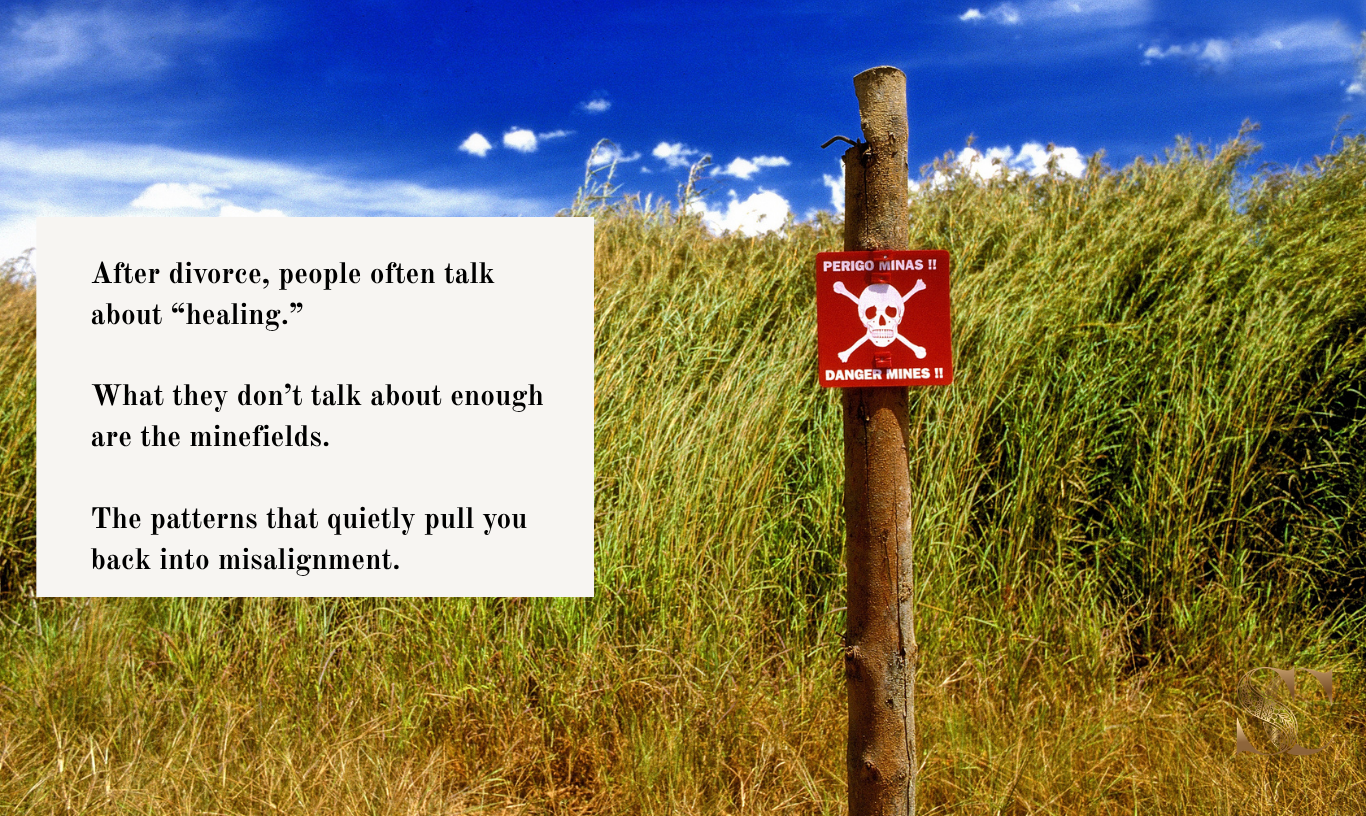
The Hidden Minefields After Divorce:
Rebound attachment
Mistaking attention for alignment.High-risk behavior
Poor decision-making driven by emotional depletion, validation-seeking, or the need to feel something again.Loneliness-driven choices
The need for human connection is real - and powerful. But when loneliness leads, discernment often follows behind.Overcorrection
Choosing the complete opposite of your ex… and unknowingly repeating the same pattern in a different form.Emotional numbness
Engaging in dating without real vulnerability.Hyper-independence
“I don’t need anyone” as a protective shield.Comparison trap
Measuring every potential partner against your ex.Distrust of good intentions
Questioning consistency, assuming something must be wrong.
And then there is chemistry.
The kind that feels electric. Immediate. Convincing.
But chemistry and passion are not always indicators of alignment.
Sometimes, they are simply your body speaking louder than your clarity.
When Your Nervous System Is Leading, Not Your Judgment
After a major life event like divorce, your nervous system is often dysregulated.
What feels urgent is not always rational.
What feels right is not always aligned.
This is why I often advise:
Do not make major personal or financial decisions in the midst of emotional upheaval.
That includes relationships.

Healing Is Not the Same as Readiness
Time alone does not make you ready.
Healing is:
Processing pain
Letting go of anger and resentment
Regulating your emotional responses
Readiness is:
Knowing your values
Holding clear boundaries
Being emotionally available
Choosing intentionally - not reacting
You can be “healed enough” and still not be ready to choose well.
And that distinction matters.
The Harder Question: Where Did I Abandon Myself?
It’s easy to focus on what the other person did. The deeper, more transformative question is:

Where did I abandon myself?
Where did I ignore what I knew?
Where did I overcompromise?
Where did I stay past misalignment?
Where did I seek validation instead of alignment?
This is not about blame. It’s about awareness. Because awareness is what allows change.
But there is another layer to this question - one that is often overlooked.
You also have to forgive yourself.
We are often encouraged to forgive the other person. To let go of what they did. To release the anger we carry toward them.
But what about the anger we carry toward ourselves?
For the decisions we made
For the signs we missed
For the things we ignored
For not acting sooner
For allowing ourselves to stay
I know I did.
I was harder on myself than anyone else could have been. I replayed everything - what I should have seen, what I should have done differently.
But that kind of reflection, if left unchecked, becomes self-punishment, not growth.
What shifted for me was this:
Awareness is meant to lead to clarity, not condemnation.
Because it was only through understanding my own patterns, my own choices, and my own role…that I was able to reach a place of forgiveness.
And that forgiveness changed everything.
It allowed me to move forward without carrying the weight of the past. It put me back in control of my own life - not defined by what happened, but by what I chose next.
Anger, Grief, and the Truth About Moving On

There is anger.
The kind that wants the other person to feel what you felt.

There is sadness.
The kind that lingers longer than you expect.
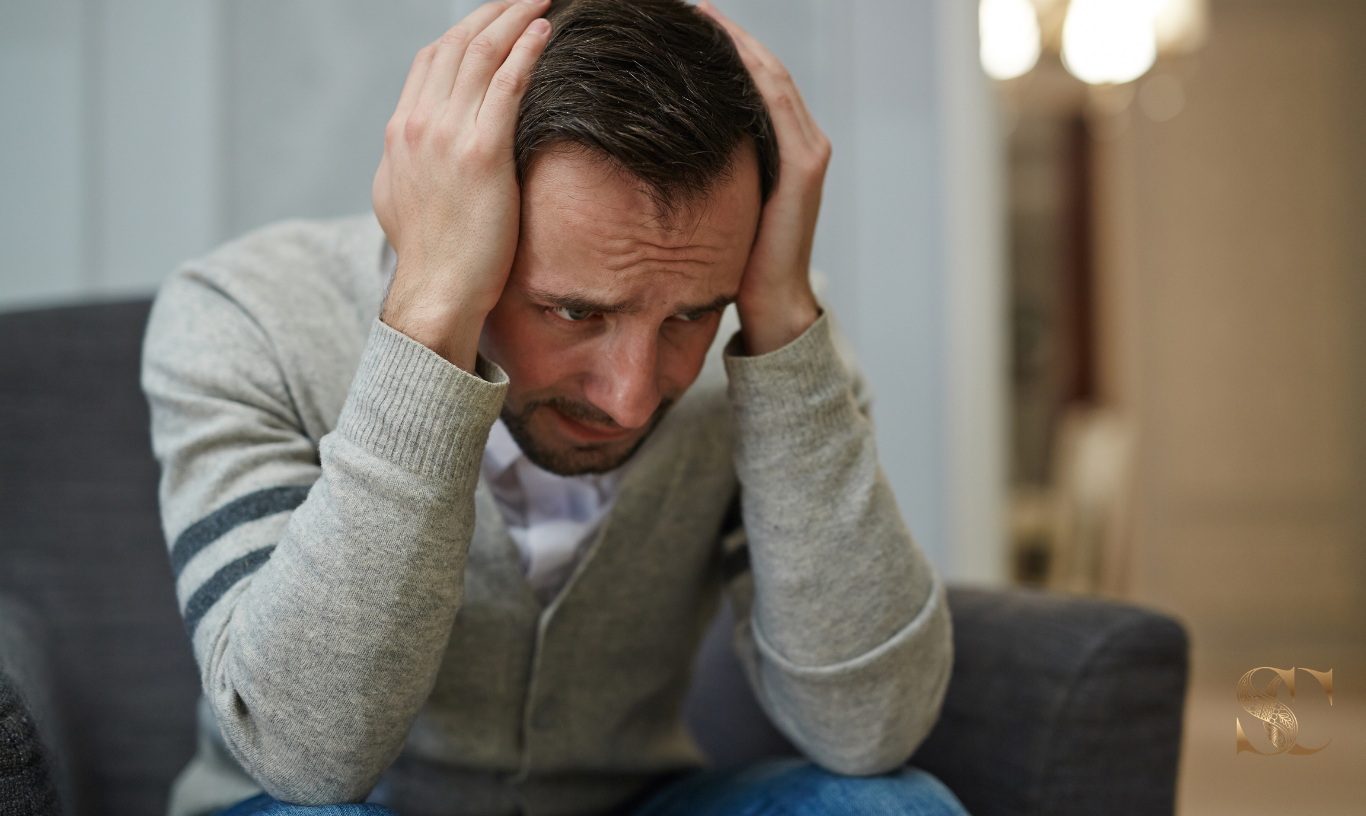
And sometimes, there is frustration with yourself:
Why didn’t I move on faster?
Why did I stay as long as I did?
But the truth is - you were navigating loss, confusion, and emotional shock.
You were not operating at your full capacity. And that is human.
Grief is not linear. You don’t “complete” it and move on neatly.
You revisit it. You process it in layers.
And slowly, it loosens its grip.
Don’t Build Walls. Build Boundaries.

There is a natural instinct after divorce to protect yourself.
To close off. To withdraw. To avoid risk entirely.
But there is a difference:
Walls protect through avoidance
Boundaries protect with awareness
Healing is not about shutting love out.
It’s about learning how to stay open - with discernment.
Relearning How to Trust Yourself
One of the most overlooked effects of divorce is this: You stop trusting your own judgment.
The goal is not just to trust someone else again.
It’s to trust yourself to choose better.
To recognize patterns earlier
To act on discomfort instead of rationalizing it
To honor your standards consistently
This is where real confidence is rebuilt.
How to Re-Enter Dating (Without Losing Yourself Again)

There is no rush.
And there is no single timeline
But there is a way to approach this next chapter with clarity:
Start with low-stakes interactions
Observe consistency over intensity
Prioritize alignment over chemistry
Pay attention to how you feel after interactions
Move at a pace where your clarity remains intact
You are not trying to prove anything.
You are trying to choose well.
Kintsugi: Rebuilding, Not Returning
There is a Japanese art form called kintsugi. Broken objects are repaired with gold - not to hide the cracks, but to honor them.

That is what this phase of life is. You are not going back to who you were.
You are rebuilding - with:
Awareness
Boundaries
Self-respect
Clarity
The “gold” is what you’ve learned.
The Risk of Love (And the Cost of Staying Guarded)

There is one more truth that doesn’t
get spoken about enough.
Even when you’ve done the work…
even when you’ve healed…
fear doesn’t disappear completely.
It shows up quietly - especially when something real begins.
I almost put my relationship with my now husband at risk because of that fear.
Not because he had done anything wrong. But because I was still protecting myself from what had been done to me before.
A friend said something to me that stayed: “He is not your ex.”
And more importantly: “You have to be willing to be vulnerable again. The reward of love is worth the risk.”
That doesn’t mean ignoring your instincts. It doesn’t mean abandoning your boundaries.
It means recognizing the difference between:
Intuition (something is genuinely misaligned)
andFear (something feels unfamiliar because it’s different - and potentially right)
If you let fear lead, you may protect yourself from pain. But you may also block yourself from the very thing you say you want.
Life After Divorce Is Not the End. It’s a Redesign.
Your life is not over. It is different. And in many ways, it is clearer.
You understand yourself more deeply:
What you need
What you will tolerate
What you will not compromise on
What truly matters
From that place, you have two powerful choices:
To ease into the next chapter intentionally
Or to wait for the right partner without urgency
Both are valid.
Final Thought
Dating after divorce is not about starting over. It is about starting again - with awareness, with clarity, and with a deeper respect for yourself.
It is an emotional reset. An opportunity to fall back in love with your life. With who you are becoming.
And at some point, it asks something of you - the courage to be open again.
Because love, when it is right, will always require a level of risk. The question is NOT whether you can avoid that risk. It’s whether you are willing to take it - this time, with wisdom.
To trust yourself.
To choose differently.
To believe that something better is possible.
And eventually - to allow someone to meet you there.
You deserve that.